Table of Contents
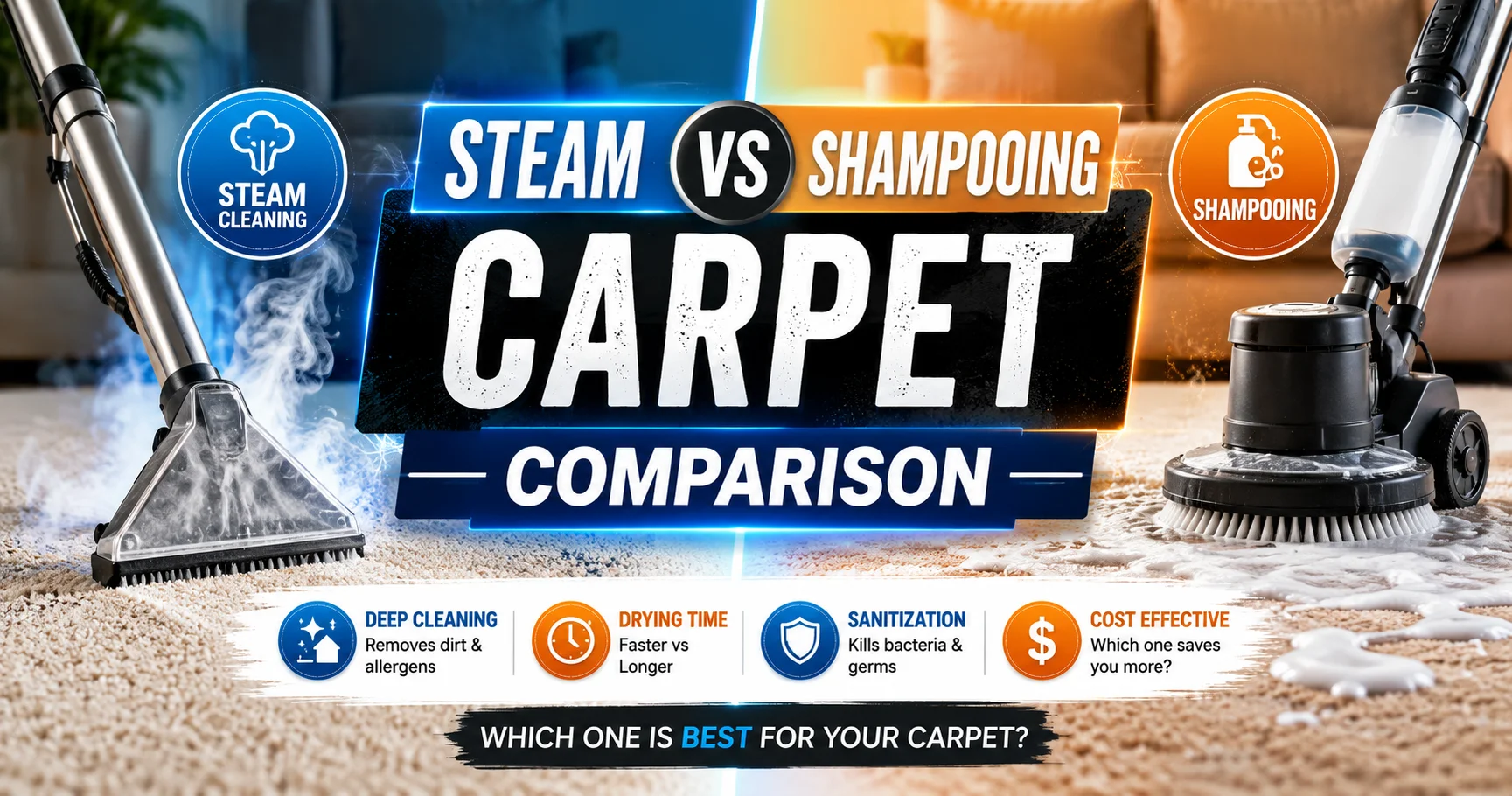
ToggleSteam Cleaning vs Shampooing Carpet Comparison
Introduction
Your carpet is the largest filter in your home, silently trapping dust, allergens, pet dander, and bacteria. Over time, even the most diligent vacuuming isn’t enough to maintain a truly healthy or vibrant floor. You’ve likely seen numerous products and services advertising “deep cleaning,” but the debate often boils down to two primary methods: Steam Cleaning vs Shampooing Carpet. Which one is the right choice for you?
Choosing the wrong method can damage expensive fibers, leave sticky residues that attract dirt, or even void your warranty. This is a battle between modern, high-temperature technology and traditional, chemical-heavy lathering. Our in-depth comparison will provide the clarity you need. We’ll explore the science, the costs, the effectiveness, and the long-term impact to help you make an informed decision that protects your investment and the health of your family.
What is Carpet Shampooing?
Carpet shampooing is the traditional method of carpet cleaning that has been around for decades. The process revolves around the application of a foamy, chemical detergent (shampoo) that is agitated into the carpet fibers using a rotary brush or a specialized bonnet.
The idea is to suspend dirt and grime within the foam. Once the foam dries, it crystallizes into a powder that can be vacuumed away. This method is often synonymous with the “dry cleaning” approach to carpets.
The Science Behind It
Shampooing works on the principle of surface-level agitation. The chemical surfactants in the shampoo break down oils and dirt, allowing the physical action of the brush to lift them to the top of the carpet pile. However, because the process doesn’t involve high heat or pressure for rinsing, much of the “cleaning” relies heavily on the vacuum afterward to remove the soil-laden crystals. If the vacuum lacks sufficient power, significant residue remains.
Pros of Carpet Shampooing
- Faster Drying Times (Sort of): Because it uses less water than steam cleaning, the carpets often feel dry to the touch within 1 to 2 hours. This is an attractive feature for busy households.
- Cost-Effective: Shampooing machines (like standard rental units) are generally cheaper to rent or buy compared to professional-grade steam cleaners. The shampoo solution itself is also relatively inexpensive.
- DIY-Friendly: This method doesn’t require specialized training or technical knowledge. You can easily rent a machine from a grocery store and handle the job yourself.
- Great for High-Traffic Surface Grime: If you are concerned about the top layer of dirt and immediate appearance (restoring brightness), shampooing can deliver quick visual results.
Cons of Carpet Shampooing
- Persistent Soapy Residue: The most significant downside. If the shampoo isn’t completely vacuumed away, it leaves a sticky, residue-filled layer. This residue acts like a magnet for new dirt, causing carpets to resoil much faster than they did originally.
- Lack of Deep Cleaning: The cleaning solution and brushes rarely penetrate the base of the carpet fibers, leaving allergens and deep-seated grit trapped near the backing.
- Potential for Fiber Damage: Aggressive rotary brushes can cause “carpet bloom” or “fuzzing,” where the fibers become unwound or frayed. This is especially dangerous for delicate, looped, or wool carpets.
- Musty Odors: If the “damp” residue remains deep in the pile, it can encourage the growth of mold or mildew, leading to a musty odor that worsens over time.
- Temporary Results: As the sticky residue attracts more dirt, you’ll likely find yourself needing to clean again sooner than expected, increasing long-term costs.
What is Steam Cleaning (Hot Water Extraction)?
Let’s clarify a common misconception: Steam cleaning, in the carpet industry, rarely involves visible steam. Professional steam cleaning is actually a process called Hot Water Extraction (HWE). It is universally recommended by carpet manufacturers and the Carpet and Rug Institute (CRI).
This method works by injecting a hot water and cleaning solution mixture deep into the carpet pile under high pressure. Simultaneously, a powerful vacuum extracts the dirty water, pulling dirt, allergens, and bacteria out from the base of the fibers.
The Science Behind It
The “steam” in the name refers to the temperature. Professional truck-mounted units heat water to approximately 200°F to 212°F (near boiling point). This high temperature is crucial; it allows the water to break the bonds between soils and fibers while also sanitizing the carpet by killing bacteria and dust mites.Pros of Steam Cleaning
- Unrivaled Deep Cleaning: The high pressure forces water into the base of the carpet, dissolving and flushing out grit that vacuuming and shampooing leave behind.
- Sanitization & Health Benefits: The high temperatures used in extraction kill 99.9% of bacteria and allergens, making it the best choice for households with asthma or allergies.
- No Sticky Residue: When done correctly with proper rinsing, the carpet is left nearly residue-free. This keeps carpets cleaner for longer and prevents the rapid resoiling issue seen with shampooing.
- Extends Carpet Life: Removing abrasive grit from the base fibers prevents wear and tear, thereby extending the lifespan of your carpet.
- Warranty Approved: Most top carpet manufacturers (e.g., Shaw, Mohawk) require HWE as the standard cleaning method to maintain your carpet warranty.
Cons of Steam Cleaning
- Long Drying Times: Because more water is used, carpets can take 6 to 12 hours (or up to 24 hours in humid conditions) to dry completely.
- Higher Initial Cost: Professional steam cleaning services are more expensive than renting a shampoo machine. DIY steam cleaners are also pricier than basic shampoo scrubbers.
- Requires Expertise: Over-wetting the carpet is a significant risk. If the technician doesn’t extract properly, you risk flooding the underlay, leading to mold and delamination.
- Heavy Equipment: Professional machines are bulky and often require transportation access. The weight can sometimes be an issue for second-story rooms.
Head-to-Head Comparison: Steam Cleaning vs Shampooing Carpet
Here we dissect the critical factors in the Steam Cleaning vs Shampooing Carpet debate.
1. Cleaning Efficacy
Steam cleaning is the undisputed champion here. By injecting water under high pressure and extracting it, it removes the deep-seated grit, allergens, and pollutants that shampooing merely pushes around or leaves on the surface. Shampooing offers a “quick fix” but doesn’t address the root problem.2. Drying Time
Shampooing generally wins this round if time is the only factor. However, it’s crucial to note that even if the surface feels dry, the residue can still attract dirt. Steam cleaning requires 6-12 hours of drying time with adequate ventilation.3. Residue & Re-soiling
This is the defining factor. Steam cleaning leaves no sticky residue. Shampooing leaves significant chemical residue, causing your carpet to look dirtier faster. In the long run, the “quick” shampoo method becomes a maintenance nightmare.4. Cost Analysis
- Steam Cleaning: Professional service costs range from $0.25 to $0.50 per square foot. DIY steam cleaner rentals cost around $40-$60 per day plus solution costs.
- Shampooing: Rental of rotary machines is cheaper ($30-$45). Bottles of shampoo are cheaper upfront. However, the increased frequency needed to maintain appearance often makes shampooing more expensive over the course of a year.
5. Effectiveness on Stains
Steam cleaning uses heat to break down proteins and oils, making it highly effective against greasy stains and biological spots (pet urine). Shampooing’s chemical surfactants are good for surface stains but often require extensive agitation which can spread the stain.6. Health and Safety
For asthma sufferers and pet owners, steam cleaning is a clear winner. The high heat eliminates dust mites and bacteria. Shampooing leaves behind wet residue and heavy chemical fragrances that can trigger respiratory issues. Furthermore, if not dried properly, shampoo residue can promote mold growth.Which Method is Best for Which Situation?
When deciding between Steam Cleaning vs Shampooing Carpet, the “best” method depends entirely on your specific situation, carpet type, and lifestyle.
When to choose Steam Cleaning:
- You have high-quality, wool, or expensive carpets that must be protected.
- You suffer from allergies, asthma, or have infants who are sensitive to chemicals.
- You have pets that leave stains and bio-contaminants.
- You want a long-lasting cleaning (ideally every 12-18 months).
- You want to ensure your carpet manufacturer’s warranty remains valid.
- The carpet is located in a high-moisture area like a basement (though ventilation is still needed).
When to choose Carpet Shampooing:
- You need a quick surface “pick-me-up” for a low-traffic guest bedroom.
- You are on a very strict budget and need a temporary solution.
- You are cleaning inexpensive carpets that are nearing the end of their life.
- You have concerns about excess water in antique or glued-down carpets where moisture can delaminate the backing.
Expert Tip: Many professional cleaners advocate a “restorative cleaning” strategy. For heavily soiled carpets, a shampooing might be used on the surface to brighten the look, followed by a steam extraction to remove the suspended dirt. However, this is rare. In 90% of cases, Steam Cleaning is the only professional-grade method recommended.
Step-by-Step Guide: How to Clean Carpet Stains Effectively
Regardless of whether you choose steam cleaning vs shampooing, treating individual stains is an ongoing process. Here is the expert method.
Step 1: Act Fast and Blot
The golden rule: never rub. Rubbing pushes the stain deeper and damages the fiber. Instead, grab a clean white towel (avoid printed towels that can transfer dye). Place the towel over the spill and press down firmly to soak up as much liquid as possible.Step 2: Identify the Stain Type
- Protein-based (Blood, Milk, Vomit): Use cool water or an enzymatic cleaner. Never use hot water as it cooks the protein, setting the stain permanently.
- Tannin-based (Coffee, Tea, Juice): Use hot water and a gentle detergent. Mild acids like vinegar can also be effective.
- Oil-based (Grease, Butter): Use a degreaser or dry-cleaning solvent to break down the oil.
Step 3: Pre-treatment
Apply a small amount of your chosen cleaning solution to the stain (do not soak the carpet). Allow it to dwell for 3-5 minutes to break the bond.Step 4: Extraction
Using a steam extraction machine, spray the area with just water and immediately vacuum it up. This “flushes” the stain out. If you are using a shampooing method, apply the foam, agitate lightly with a soft brush, and allow it to crystallize before vacuuming.Step 5: Final Rinse
If using a chemical shampoo, it’s wise to perform a water rinse. Use a spray bottle with clean water and dab it up with a towel to remove any residue. This residue is often the reason stains reappear later.Common Mistakes to Avoid When Cleaning Carpets
In the battle of Steam Cleaning vs Shampooing Carpet, even pros can make mistakes. Here are the most common errors that lead to damaged flooring.
- Over-Wetting the Carpet: This is the number one killer of carpets. Too much water soaks into the padding beneath, leading to mold, mildew, and delamination (where the backing separates from the fiber). Steam cleaning must be paired with powerful extraction.
- Incorrect Chemical Usage: Using the wrong pH balance can destroy carpet fibers. For example, using acidic cleaners on wool can cause browning. Always use pH-neutral solutions.
- Carpet Padding Overlooked: People often clean the surface but forget that the padding underneath absorbs the grime. If the padding is saturated, no amount of surface cleaning will eliminate odors.
- Poor Ventilation: Failing to turn on fans or open windows while drying extends drying times significantly and promotes bacterial growth.
- Vacuuming Too Quickly: After a shampoo, if you vacuum before the crystals have fully dried, the carpet won’t be clean and the vacuum filter will clog.
Safety Warnings: Protecting Your Floors and Health
Cleaning your carpet can be dangerous to both your health and your flooring if not done correctly. Please observe these safety guidelines.
- Electrical Safety: Never bring electrical shampoo machines near water spills. Ensure you don’t overwork the motor.
- Chemical Safety: Many shampoos contain formaldehyde, perchloroethylene, and other volatile organic compounds (VOCs). Always ensure the room is well-ventilated and keep pets and children away until the area is completely dry.
- Slipping Hazard: The carpet surface will be slippery during the drying process. Put up signs to avoid accidental falls.
- Furniture Protection: Place aluminum foil or plastic trays under your furniture legs. If you don’t, the dampness can cause rust stains to bleed into the carpet.
Real-World Case Studies: The Results Speak Volumes
To solidify the Steam Cleaning vs Shampooing Carpet debate, let’s review some anecdotal evidence and real-world cleaning stats.
Case Study 1: The Pet Owner
Scenario: A family living in Miami with three large dogs. They attempted to clean their high-pile carpets using a rental shampoo machine monthly. Within three days of cleaning, the carpets looked dull and smelled musty.Solution: They hired a professional truck-mounted steam cleaning service. The technician noted that the shampoo residue had saturated the bottom of the fibers and was holding onto pet dander. The high-pressure steam flushed out the residue and removed the bacteria. The result: the carpet looked brand new and smelled fresh for over 6 months.
Verdict: Steam Cleaning wins for pet-related biowaste.
Case Study 2: The Commercial Office
Scenario: A busy commercial office in New York had high-traffic entryways that looked gray. They opted for a quick “dry bonnet” shampoo method to avoid closing down the office for hours. The result was an immediate visual improvement, but the gray returned within a week.Solution: A transition to a hot water extraction system removed the deep-seated soil the bonnet had just polished over. The office manager implemented a bi-annual extraction schedule and a vacuuming schedule, reducing long-term wear.
Verdict: Steam cleaning provides the longevity required for high-traffic commercial spaces.
Case Study 3: The Wool Rug
Scenario: An owner of a high-value Persian wool rug used a DIY shampoo cleaner on a small stain. The vigorous agitation caused the fibers to “fuzz” and fray.Solution: The damaged area had to be patched by a rug restorer. The owner learned that wool requires delicate cleaning, preferably with cold water extraction or very controlled steam.
Verdict: Shampooing can cause irreversible damage to delicate textiles.
Expert Insights and Premium Tips from Niaz Khan
After decades of experience in the SEO and home improvement industry, and after consulting with top-certified professional cleaners, I can confidently state that the decision isn’t really a choice if you value your carpet’s longevity.
Insight 1: The Manufacturer’s Mandate
95% of carpet warranties (including major brands like Stainmaster) are void if you don’t follow the Hot Water Extraction method. Shampooing is often explicitly excluded. If you have a new carpet, choosing shampooing over steam cleaning could cost you your warranty.Insight 2: The True Cost of Budget
Many choose shampooing to save money today. However, the sticky residue ensures that your carpet resoils up to 50% faster. Therefore, you must clean 2-3 times a year with shampooing instead of once a year with steam. Over 5 years, shampooing costs more.Insight 3: The Water Logic
There is a myth that steam cleaning ruins carpets with water. In reality, improper extraction ruins carpets, not the water itself. A professional truck-mounted unit has 200 pounds per square inch (PSI) of pressure. The suction is powerful enough to extract the moisture 95% of the way. If you are a DIYer renting a small unit, you cannot achieve this high PSI, which is why professionals are almost always the best choice.Premium Tips from “Niaz Khan Expert”
- Mixing Methods: For the ultimate clean, choose steam cleaning (HWE) as your primary method. However, if you want to speed up drying, you can use a gentle shampooing pre-spray to treat traffic lanes, then use the steam extractor to rinse them away. This provides a “one-two punch” without leaving residue.
- Annual Schedule: Mark your calendar. October and March are the best months to perform a deep steam clean. This removes the winter and summer grime and prepares your home for temperature shifts that increase humidity.
- The Ice Cube Test: If you aren’t sure if your carpet needs cleaning, drop a white cloth on it. If the cloth comes up with gray marks, the soil is already embedded. Steam cleaning is your only option to fix this.
- Targeting VOCs: If you have children, prioritize steam cleaning. The lack of chemical residue ensures that your floor remains a safe, non-toxic environment.
Frequently Asked Questions (FAQs)
Q1: Is steam cleaning better for carpets than shampooing?
Yes. Steam cleaning (Hot Water Extraction) is generally superior because it sanitizes, removes deep dirt, and leaves no sticky residue. Shampooing only cleans the surface and often creates a residue that attracts dirt.
Q2: Is steam cleaning or shampooing safer for older carpets?
Shampooing might be perceived as safer because it uses less water, but the physical agitation can destroy older, brittle fibers. Steam cleaning, with careful moisture control, is often safer as it flushes out dirt without rubbing the fibers.
Q3: Can I rent a steam cleaner and do it myself?
Yes, you can rent units, but they are less powerful than professional truck-mounted units. They often don’t reach the necessary 200°F temperature required for sanitization, making them less effective.
Q4: Why does my carpet look dirtier after shampooing?
This is due to a process called “wicking.” The shampoo residue pulls dirt from the bottom of the carpet back up to the surface as it dries. Additionally, the sticky residue attracts new dust quickly.
Q5: Does steam cleaning shrink carpets?
No. Synthetic carpets are generally heat-set. However, cheap natural fiber rugs (like sisal) can shrink. Always check the manufacturer’s label.
Q6: Which method dries faster?
Shampooing dries faster because it uses less water. However, the “dry” surface doesn’t mean the residue is gone, meaning the drying benefit is often outweighed by the cleaning deficit.
Q7: Will steam cleaning remove pet urine smell?
Yes. The high temperature of steam cleaning kills the bacteria causing the odor, making it the best method for pet owners. Shampooing just masks the smell with fragrance.
Q8: Is carpet shampooing cheaper than steam cleaning?
Yes. Rentals and DIY shampooing are cheaper to buy initially. However, when factoring in how frequently you must clean, steam cleaning is ultimately more cost-effective.
Q9: Which method protects the carpet pile best?
Steam cleaning protects the pile best. Shampooing’s rotary brushes cause “fuzzing” by untwisting the yarn, which wears the carpet out faster.
Q10: Should I vacuum before steam cleaning or shampooing?
Absolutely. Regardless of method, you must vacuum thoroughly before applying any liquid. This removes loose grit that could turn into mud when wet.
Conclusion: Making the Final Decision
So, which option wins the Steam Cleaning vs Shampooing Carpet debate? When we consider hygiene, longevity, warranty requirements, and total cost of ownership, Steam Cleaning (Hot Water Extraction) is the clear winner.
Shampooing provides a temporary fix that often creates long-term headaches. The chemical residue left behind acts like glue for dust, the high-speed brushes can fray your carpet fibers, and the lack of extraction means you are merely masking the dirt rather than removing it.
Unless you are dealing with a cheap, sacrificial carpet that you don’t care about, or a situation where water simply cannot be used, steam cleaning is the only way to restore your carpet to a pristine, healthy state. It delivers what the modern consumer demands: a deep, safe, and long-lasting clean. Invest in professional steam cleaning once a year, and your carpet will reward you with years of beauty and comfort.
Checklist for Homeowners
- □ Have I checked my carpet warranty for cleaning requirements?
- □ Do I have high-traffic areas that need deep cleaning?
- □ Are there children or allergy sufferers in the home?
- □ Have I set aside enough time for proper drying (6-12 hours) if using steam?
- □ Have I booked a certified professional or rented a high-quality machine?
- □ Do I have furniture protectors and proper ventilation ready?
Sources and References
- Carpet and Rug Institute (CRI) – Seal of Approval Program.
- Certified Clean Care / IICRC Standards for Professional Cleaning.
- Manufacturer Warranty Guidelines (Shaw, Mohawk, Beaulieu).
- American Lung Association Reports on Indoor Air Quality.
- Consumer Reports – Carpet Cleaner Testing.
Disclaimer
The information provided in this article is for general informational and educational purposes only. All statements are opinions based on experience and available data. We are not a cleaning contractor. Results may vary based on carpet type, age, and equipment used. We strongly recommend consulting with an IICRC-certified professional for personalized advice regarding your specific flooring needs. We do not assume liability for any damage to personal property resulting from the use of information on this page.Written By Niaz Khan

Niaz Khan is an SEO blogger, digital marketer, and content writer with 5+ years of experience in search engine optimization, content strategy, and online growth.
Focused on people-first content and Google-compliant SEO practices.